Electric Scissors vs. a Utility Knife for Cardboard
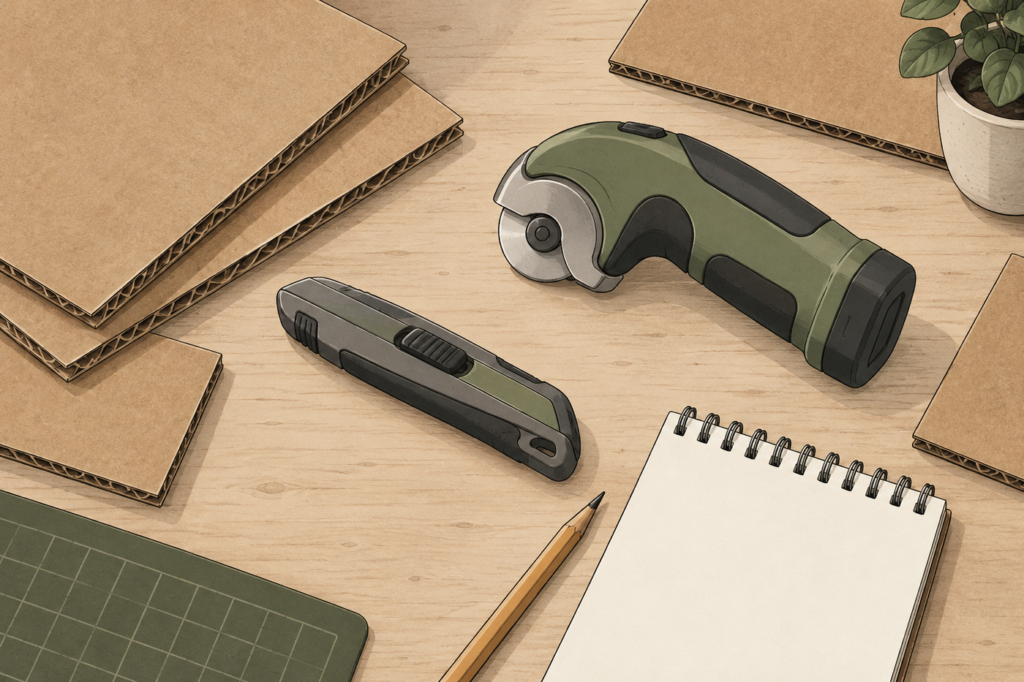
Choose between electric scissors and a utility knife by matching the cutter to your cardboard and the cut you need. Start with material thickness, any coatings or reinforced layers, and whether you’re trimming an edge or cutting a shape. A tool advertised for cardboard still needs to support your particular job.
If you’re clearing packing boxes or planning a craft project, the checklist below will help you compare the options. You may find that a tool you already own meets the requirements.
Cover: AI-generated editorial illustration. The tools are generic and do not show a specific SEESE product or a cutting test.
Electric scissors vs. a utility knife: what changes?
For this comparison, electric scissors means a compact, powered rotary cutter. A utility knife uses a blade you move by hand. Those mechanisms create different setup and maintenance questions; they don’t establish a universal winner for speed, cut quality, or ease of use.
| Buying question | Cordless electric scissors | Manual utility knife |
|---|---|---|
| Does it support the material? | Check the exact model’s approved materials and thickness limit. | Check the knife and blade manufacturer’s intended materials and instructions. |
| What preparation does it need? | Confirm charging requirements, blade condition, and the prescribed setup. | Confirm the correct blade, its condition, and the prescribed work setup. |
| Will it make the required cut? | Verify the allowed starting method and cut shapes in the instructions. | Verify the allowed cutting method and work support in the instructions. |
| What will need replacing? | Identify the compatible cutter blade and any model-specific charging accessories. | Identify the exact replacement blade type and replacement procedure. |
| Is an upgrade necessary? | Consider it when its documented capabilities fit a recurring task. | Keeping your current knife may make sense when it already supports the job. |
A material application belongs to a specific tool and blade. For example, STANLEY lists cardboard among applications for its 99E utility knife. That does not establish a limit for every utility knife or for a powered cutter. Check each candidate model’s own documentation.
Check the cardboard before choosing the cutter
“Cardboard” can describe different constructions. Record what you actually have rather than relying on the shipping-box label alone. Include the measured thickness and note any layers, tape, staples, coatings, or other materials that would be in the cutting path.
Next, describe the finished shape. Trimming an outside edge and making an opening within a panel are different requests. Confirm that the tool’s instructions support the required method before trying it. This guide helps with selection; follow the specific tool’s operating and safety instructions for the cut itself.
Frequency also matters to the buying decision. For an occasional task, replacing a suitable tool may add little value. For repeated projects, compare charging, blade replacement, storage, and your actual workflow. A time-saving claim needs a test under comparable conditions.
Your cardboard cutter worksheet
Copy these prompts into a note before you compare listings. Leave an item marked “unconfirmed” when you don’t have an answer.
- Material: What is the board made of, and are other materials attached?
- Thickness: What did you measure, and in which unit?
- Cut: What shape do you need, and where must the cut begin?
- Frequency: Is this a one-time packing job or a repeated project?
- Tool evidence: Which exact model instructions cover this material and method?
- Ownership: Can you obtain the correct blades and charging accessories?
Example setup: You want to trim several cardboard panels for drawer dividers. First record the panel construction, thickness, and required straight edges. Then compare those details with the instructions for your current cutter and the electric model you’re considering. This is a planning example, not a SEESE performance test.
What the SEESE electric scissors listing confirms
The SEESE cordless electric scissors listing describes rechargeable operation, a rotary cutting blade, and suitable cardboard and fabric applications. It advertises two blades and a storage pouch. Confirm the supplied blade types and charging accessories for the package you select.
The listing does not specify a maximum material thickness. Before ordering for a particular board, request the model instructions and confirmation for your material and thickness. Don’t substitute another brand’s published capacity for this missing detail.
You can also browse power tools for home projects if your task calls for a different type of tool.
Questions before buying
Can electric scissors cut every shipping box?
A cardboard application alone does not confirm every box construction or thickness. Match the exact cutter to the material and method described in its instructions. For the SEESE model above, the maximum thickness remains a detail to confirm before choosing it for your boxes.
Should I replace a utility knife that already works for my project?
If its instructions cover your material and task, you may already have what you need. Evaluate an electric cutter against a specific recurring need, such as the type of work you do and the preparation it requires. This guide does not claim either option is faster or safer.
What should I send when asking about material suitability?
Provide the product link, material description, measured thickness, and a photo showing its construction. Describe the intended shape and where the cut starts. Ask SEESE product support to confirm the model and supplied blades using those details.
Your next step: Match the completed worksheet to a specific model. Check the scissors specifications and package details before you choose.
About this guide: Prepared for SEESE from the linked product listings and manufacturer information. It is a buying checklist, not a hands-on comparison. Product-specific instructions take precedence over general examples.